Flickering Lights, Explained in Plain English
A light that flickers, dims when something else kicks on, or flutters without any pattern puts you in an odd spot. Nine times out of ten it's nothing serious.
The tenth time, it's an early warning that a connection somewhere is heating up. You can't tell which from where you're standing, and that's the entire reason this page exists.
Skip everything below and call (02) 9134 9029 now if there's any burning smell involved.
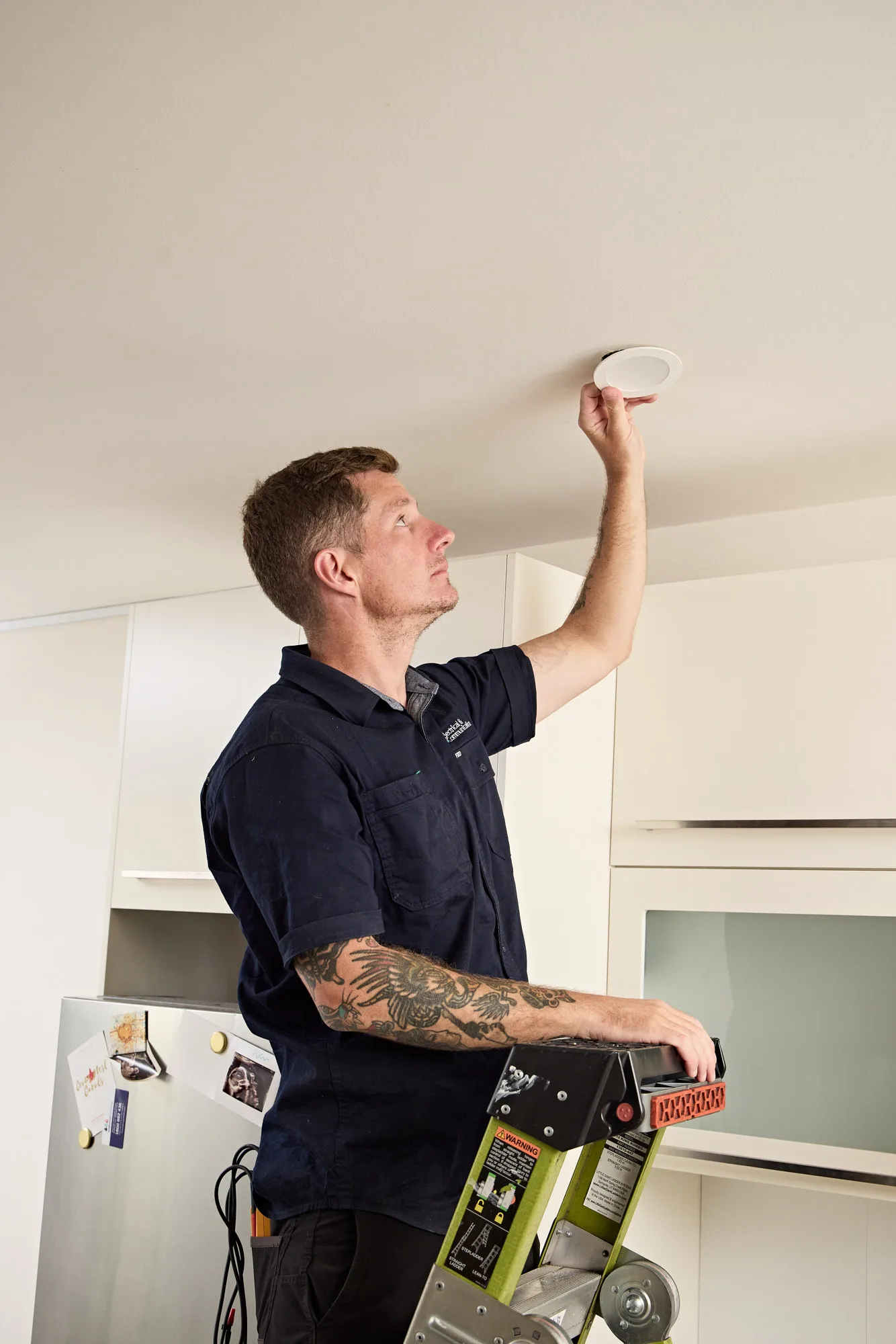
Why Your Lights Are Doing That
A steady light needs steady voltage. Flickering is simply that voltage wobbling, and the wobble traces back to a handful of usual spots.
Most often it's a connection working loose somewhere between the switchboard and the fitting. Sometimes it's a driver inside an LED downlight starting to fail internally.
Other times a circuit is fine most of the day and only sags once a bigger appliance joins it. There's also a genuinely benign cause: some dimmers just don't play well with certain LED globes, full stop, and nothing is actually wrong.
Every one of these puts on roughly the same show from the couch, which is exactly why guessing rarely gets it right the first time.

Common Causes of a Flicker
- A connection that's loosened over time, at a switch, junction or the switchboard itself.
- An LED driver on its way out, the small internal converter that regulates the globe's power.
- Mismatched dimmer and globe hardware, older dimmers weren't built for today's low-draw LEDs.
- A circuit under strain, dips when a heavy appliance shares the same run.
- Worn contacts inside a light switch, no longer closing as cleanly as they once did.
- A whole-house flicker from the supply side, uncommon, but worth ruling out if every room does it at once.
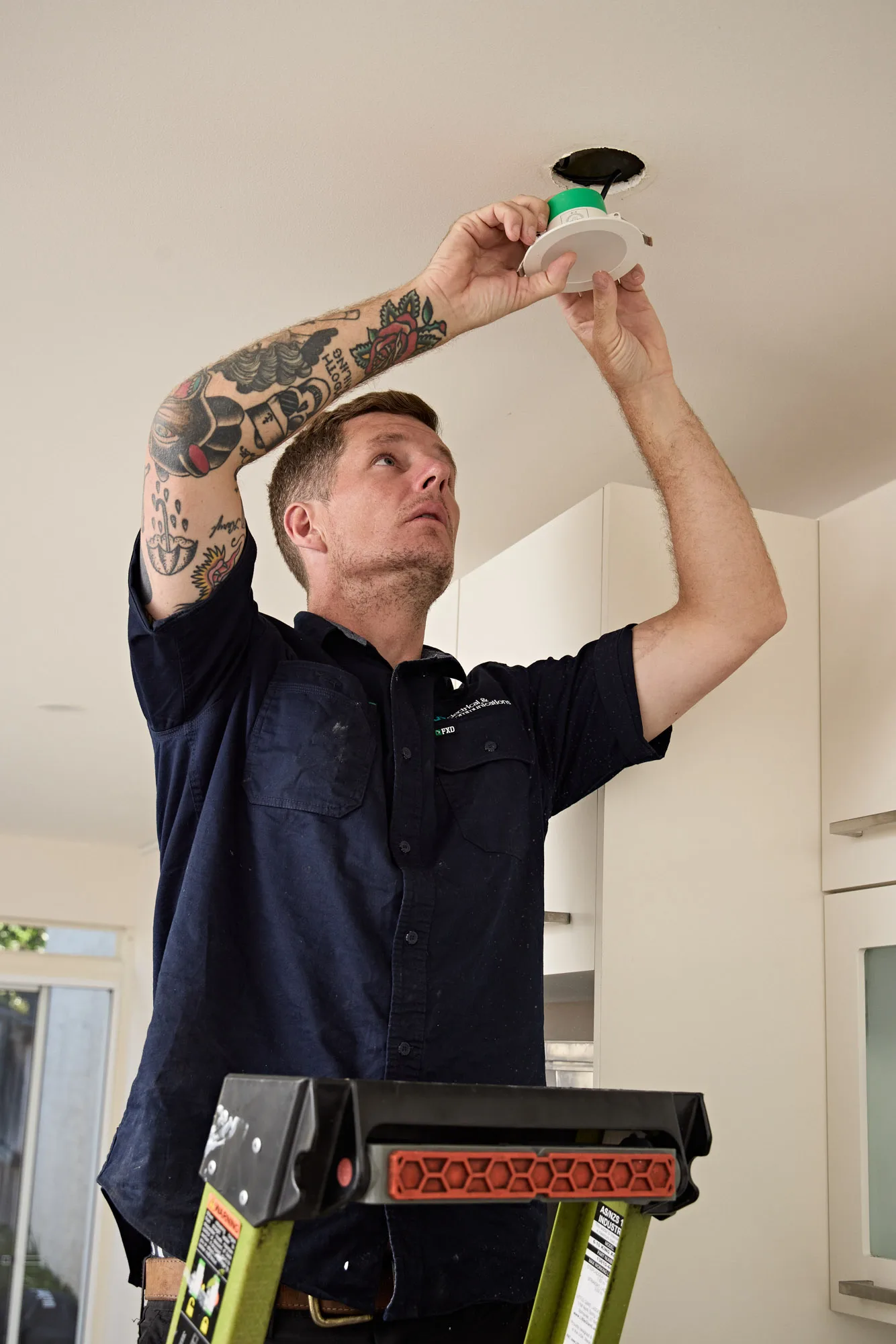
When a Flicker Is Urgent
Most flickers are irritating, not dangerous. A handful of versions deserve an urgent phone call instead of a routine booking.
Ring us if the flicker gets worse whenever a big appliance runs, if a nearby switch or point feels warm, or if there's any hint of hot plastic in the air.
One light, misbehaving the same way every time, with nothing warm nearby, can generally wait for a scheduled visit rather than an urgent one.
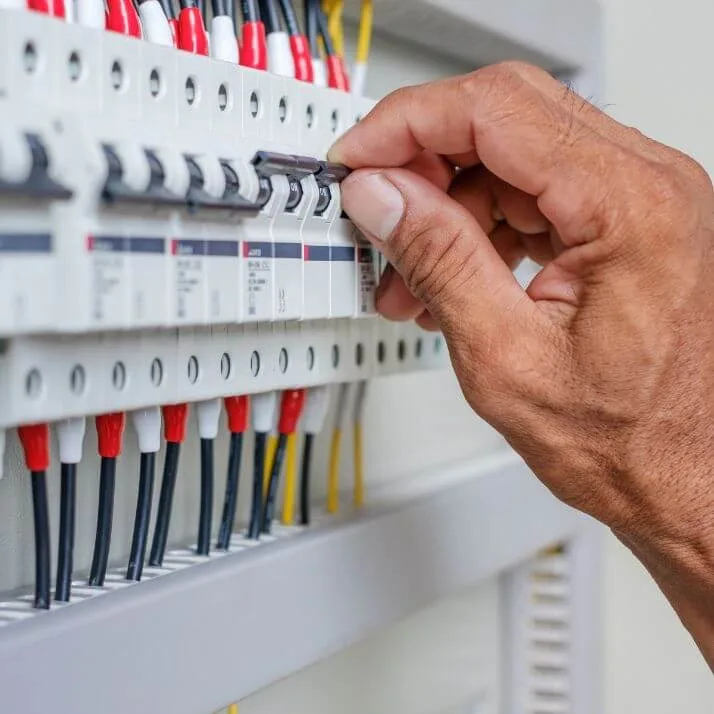
What To Do Right Now
- Watch for a pattern. Single fitting or several, constant or load-triggered, this narrows things down before we arrive.
- Check nearby switches and points for warmth.
- Keep heavy appliances off that circuit until it's been looked at, if load seems to be the trigger.
- Call (02) 9134 9029 and walk us through exactly what you're seeing.
How We Fix and Certify the Repair
We test the circuit under real load rather than just eyeballing the fitting, since a sagging circuit only reveals itself once genuine demand runs through it.
From there we trace outward, checking the fitting, the switch and the wiring back toward the board until we find where voltage actually drops.
A failing driver gets replaced, and a loose connection gets remade properly.
Where the circuit itself is the issue, we'll lay out what upgrading it involves before doing anything.
Everything notifiable gets tested and certified before we call the job finished.
You'll get a written price before any of it starts, so there's no surprise waiting on the invoice.
A Bushland Wrinkle Worth Knowing
Mount Colah backs directly onto Ku-ring-gai Chase National Park, and a good stretch of the suburb's overhead supply runs through or near mature tree cover as a result.
Wind pushing branches near power lines can produce a flicker that tracks with weather rather than anything happening inside the house itself.
It's one contributor among several, not a diagnosis on its own, but it's worth mentioning if your flicker seems to line up with windy nights more than anything you're doing indoors.
Either way, the fix is the same process: test the circuit properly rather than assume the weather explains everything.
Preventing the Next Flicker
- Pair dimmers correctly with LED-rated globes the first time, avoiding mismatched hardware.
- Get loose connections fixed early, before they progress into something bigger.
- Spread demanding appliances across separate circuits rather than one heavily used run.
- Have ageing wiring assessed if fault-finding points that way.
- Book a periodic check on older switchboards, where terminals loosen with age.
Other Faults We Chase Down
A flicker that escalates into no power at all belongs on our power outages page, while a circuit that trips rather than flickers is covered under tripped circuit breaker.
Any burning smell alongside the flicker deserves the urgent guidance on our burnt smell page instead.
Outside Mount Colah, we're regularly working through Asquith, Hornsby and Berowra too.

Book an Electrician Today
A flicker rarely sorts itself out, and finding the actual cause beats hoping it settles down. Call (02) 9134 9029 and we'll get someone out to test it properly.
Common questions
Your Flickering Lights FAQs
Is the problem the light fitting or the wiring behind it?
One light misbehaving on its own usually means the globe, driver or that one connection. Several lights acting up together, especially when something else switches on, points further back toward the circuit.
Does my safety switch cover this?
A safety switch reacts to a fault leaking to earth, not to voltage that's simply unstable. Flickering and shock protection are related jobs but not the same one.
What's the price range for sorting out a flicker?
Depends entirely on where we find the fault, from a quick driver swap to a longer chase through the board. Either way the price is set in writing and agreed before we start.
Why does it happen mainly when the kettle or heater's on?
Big appliances pull a lot of current the moment they switch on, and an already-stretched circuit briefly can't hold voltage steady while that happens. That's a load problem, not a globe problem.
Could this actually start a fire?
Rarely, but it's possible if the cause is a heat-building connection rather than a simple globe or dimmer mismatch. That's the whole reason to get it tested rather than assumed.
What's your process for locating the fault?
Testing starts at the board and works outward toward the fitting, circuit by circuit. The same flicker can come from a connection right at the switch or one three rooms away, so we follow the current rather than guess.